In simple terms
The Rosary is a Catholic prayer of meditation on the life, death and Resurrection of Jesus Christ. While repeating familiar prayers such as the Our Father and Hail Mary, we reflect on Gospel events called the Mysteries of the Rosary.
Although Marian in character, the Rosary is fundamentally centred on Christ.
What is the Rosary?
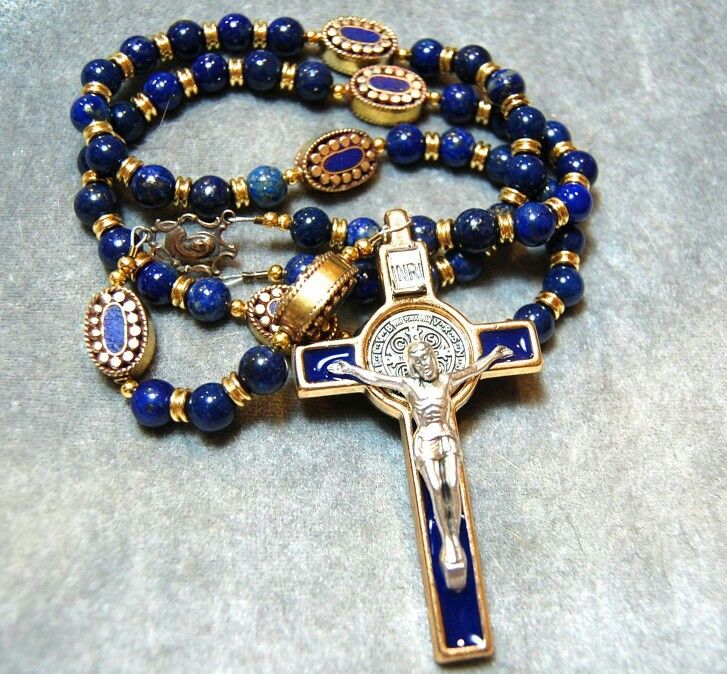
The word Rosary can refer both to the prayer itself and to the string of beads used to keep one's place while praying.
The prayer developed gradually over centuries in the life of the Church. St John Paul II described it as a prayer loved by many saints and encouraged by the Church, and wrote that although it is clearly Marian in character, it is at heart a Christ-centred prayer.
The Rosary leads us through important moments in the Gospel. By announcing a mystery, reflecting on it and then praying a decade of the Rosary, we allow the words of prayer to accompany meditation on Christ.
Why do Catholics pray the Rosary?
Catholics pray the Rosary to contemplate Christ with Mary. The repetition of the prayers is not intended to be empty repetition. It gives the prayer a gentle rhythm while the mind and heart return to the Gospel mystery being contemplated.
The Rosary can be prayed privately, with family, in a parish, at a funeral vigil, during Eucharistic adoration where appropriate, while travelling, or at many other times of prayer.
It is a devotional prayer. It does not replace the Mass, the Sacraments or the reading of Scripture.
Is the Rosary about Mary or Jesus?
Both Mary and Jesus are present in the Rosary, but its ultimate focus is Christ. The mysteries are principally events in the life and saving work of Jesus, contemplated with the help of Mary, who points believers toward her Son.
The Hail Mary itself is centred on Jesus: its first part draws from the greetings to Mary in the Gospel of Luke, and its centre is the name of Jesus, the blessed fruit of her womb.

Do Catholics worship Mary?
No. Catholics worship God alone: Father, Son and Holy Spirit.
The Church honours Mary because she is the Mother of Jesus and asks for her intercession, just as Christians ask one another to pray for them. Catholic teaching distinguishes the special honour given to Mary from the adoration that belongs to God alone.
The four sets of Mysteries
The Rosary contains twenty mysteries grouped into four sets. Each set contains five moments for meditation.
Joyful Mysteries
- The Annunciation
- The Visitation
- The Nativity
- The Presentation
- The Finding of Jesus in the Temple
Traditionally prayed on Monday and Saturday.
Luminous Mysteries
- The Baptism of Jesus in the Jordan
- The Wedding at Cana
- The Proclamation of the Kingdom and Call to Conversion
- The Transfiguration
- The Institution of the Eucharist
Traditionally prayed on Thursday.
Sorrowful Mysteries
- The Agony in the Garden
- The Scourging at the Pillar
- The Crowning with Thorns
- The Carrying of the Cross
- The Crucifixion and Death of Jesus
Traditionally prayed on Tuesday and Friday.
Glorious Mysteries
- The Resurrection
- The Ascension
- The Descent of the Holy Spirit
- The Assumption of the Blessed Virgin Mary
- The Coronation of Mary
Traditionally prayed on Wednesday and Sunday.
The weekly schedule is a traditional pattern rather than an absolute rule. Personal or liturgical circumstances may lead people to choose a different set of mysteries.
How to pray the Rosary
There are small variations in customary practice, but the following is a simple and widely used way to pray a five-decade Rosary.
What is a decade?
A decade is one Our Father followed by ten Hail Marys and a Glory Be, prayed while meditating on one mystery.
Five decades make up the usual Rosary prayed at one time.
Do I need Rosary beads to pray it?
No. Rosary beads are helpful because they allow you to keep track of the prayers without concentrating on counting, but the prayer can still be prayed without beads.
The Crucifix and beads also serve as physical reminders that prayer involves the whole person and that our faith can be carried into ordinary daily life.
Can a Rosary be blessed?
Yes. A Rosary may be blessed for devotional use. A blessed Rosary should be treated respectfully as a sacred object.
Christ To The World Rosaries
Rosaries sold by Christ To The World are supplied unblessed.
After purchasing one, you may take it to the priest at your church and ask to have it blessed.
What if I am new to the Rosary?
You do not need to know everything before you begin. Start slowly. Choose one set of mysteries, keep a simple guide nearby and allow yourself time to learn the prayers.
If your attention wanders, gently return to the mystery. The goal is not perfect concentration. The Rosary is a prayer of perseverance, meditation and love.
A brief note on the history of the Rosary
The Rosary did not appear all at once in its present form. It developed gradually during the second millennium of Christianity through patterns of repeated prayer and meditation on the mysteries of Christ.
The Dominican tradition played an important role in spreading the Rosary. Over time the form familiar to Catholics today became firmly established in the devotional life of the Church.
In 2002, St John Paul II proposed the five Luminous Mysteries to deepen meditation on important events in Christ's public ministry between his Baptism and Passion.
Remember
The Rosary is not a substitute for Scripture or the Sacraments. It is a way of prayer that helps Catholics meditate on the Gospel and contemplate Jesus Christ with Mary.
You can pray it alone or with others, with beads or without them, slowly or in one sitting. What matters is that the prayer leads the heart toward God.
Authoritative Catholic sources
Rosarium Virginis Mariae — St John Paul II
The Mysteries of the Rosary — The Holy See
Catechism of the Catholic Church — Christian Prayer and Mary