In simple terms
Catholic statues and sacred images are visual reminders of Jesus Christ, the Blessed Virgin Mary, the saints and the mysteries of the faith.
Catholics do not worship wood, stone, paint or plaster. Worship belongs to God alone. Honour shown before a sacred image is directed toward the person represented.
Why does the Catholic Church use sacred images?
Christian sacred art is closely connected to the mystery of the Incarnation. The Son of God truly became man in Jesus Christ. Because Christ took on a visible human nature, the Church teaches that He may be represented in sacred images.
The Catechism explains that Christian iconography expresses in images the same Gospel message that Scripture communicates in words. Sacred images can therefore teach, remind, inspire and help the faithful contemplate the mysteries of faith.
Is this idolatry?
No. Catholic teaching makes a clear distinction between the adoration owed to God alone and the veneration shown to sacred images.
A statue is not treated as a god. The material object is not believed to possess divinity. Rather, an image can remind the faithful of the person represented and help turn the mind and heart toward God.
Worship
Adoration belongs to God alone: Father, Son and Holy Spirit.
Veneration
Respect and honour may be shown toward sacred images because of the holy person or mystery they represent.
Why are there statues of Mary and the saints?
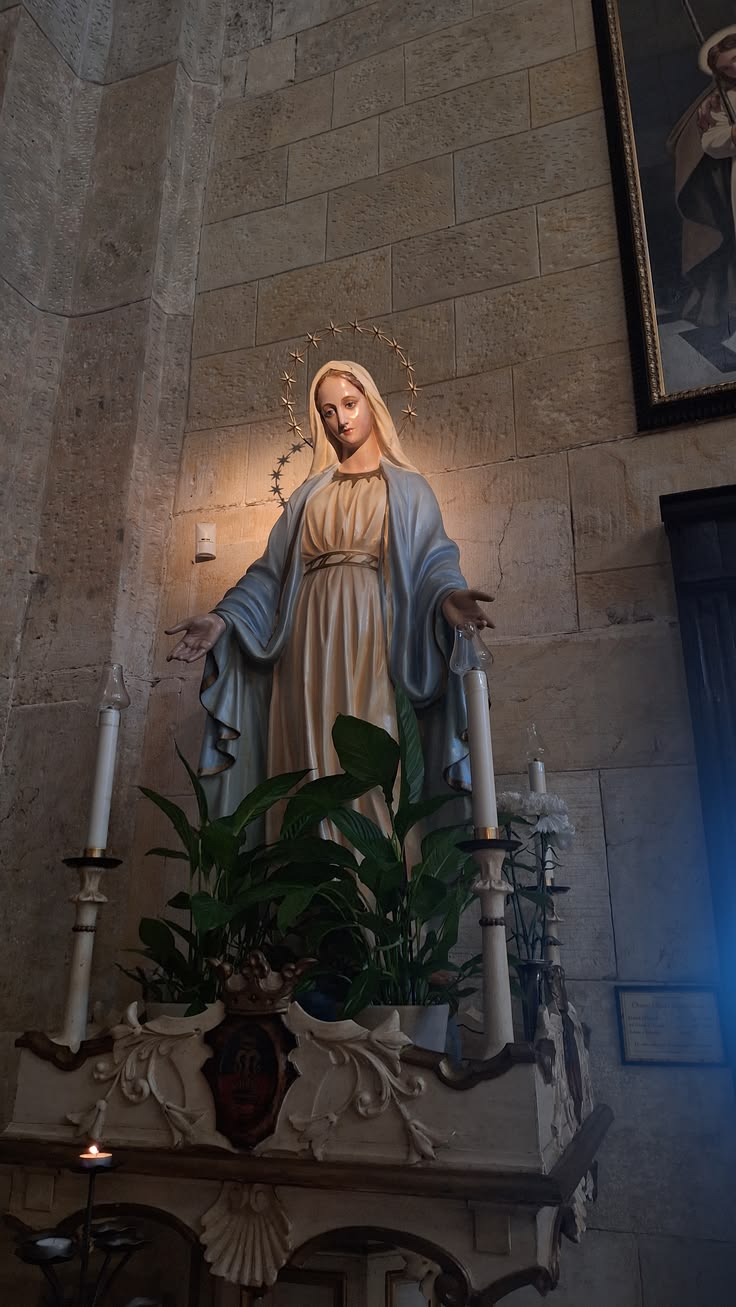
Catholics honour Mary and the saints because of God’s work in their lives and because they are examples of faithful discipleship.
A statue of Mary does not mean that Catholics believe Mary is a goddess. A statue of a saint does not mean that the saint is being worshipped. These images can remind Christians of holy examples, encourage prayer and point toward the communion of saints.

What about images of Jesus?
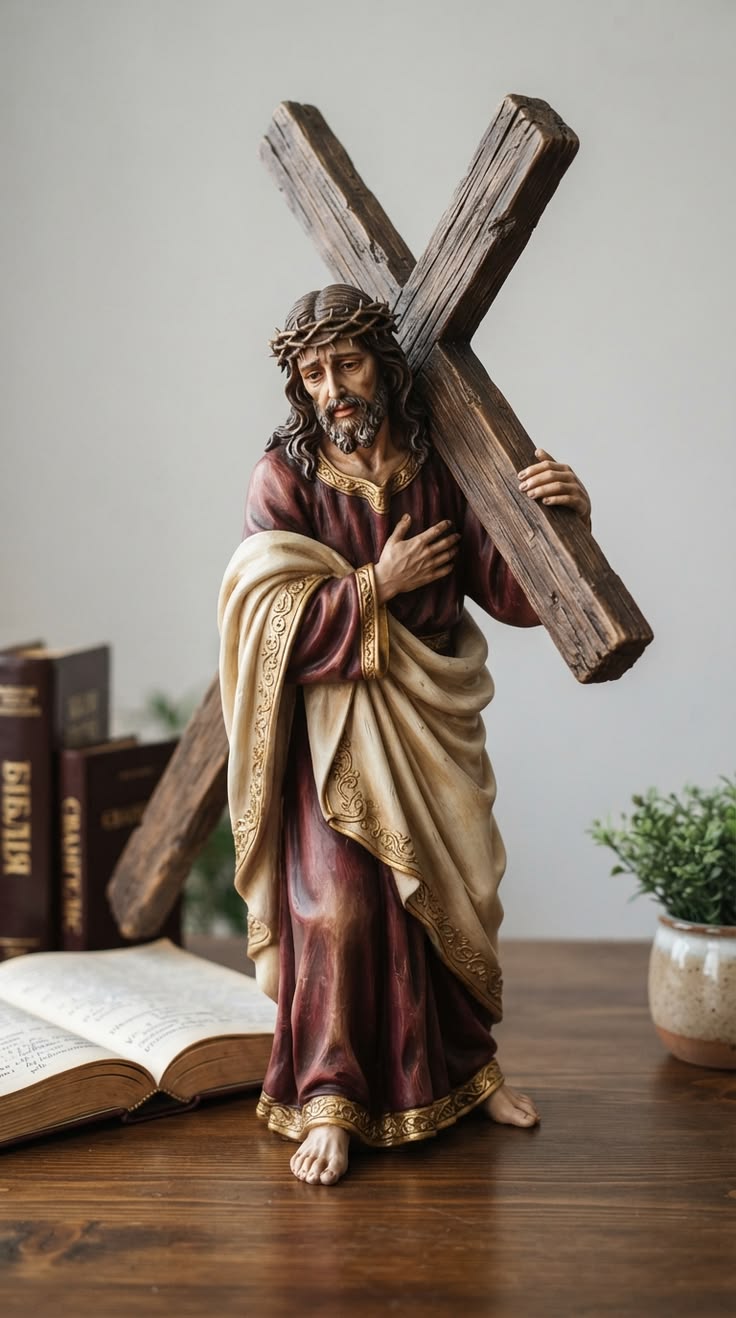
Images of Jesus focus attention on the mystery of the Word made flesh. A Sacred Heart image, a Crucifix, an image of Christ the Good Shepherd or a statue of Jesus carrying the Cross can call to mind different moments and truths of His life and saving work.
Why do Catholics sometimes kneel, bow or light candles before an image?
These gestures can be signs of prayer, respect or devotion, but the gesture is not directed to the material object as though it were divine.
A person may kneel before a Crucifix while praying to Christ, light a candle near a statue of Mary while asking for her intercession, or pause before an image of a saint while asking that saint to pray for them.
The outward gesture only makes sense when understood together with the prayer and intention of the person.
The image is not the destination
Sacred art is meant to lead beyond itself. A statue or image should help direct attention toward God, the mysteries of the faith and the holy person represented.
Sacred images in the home
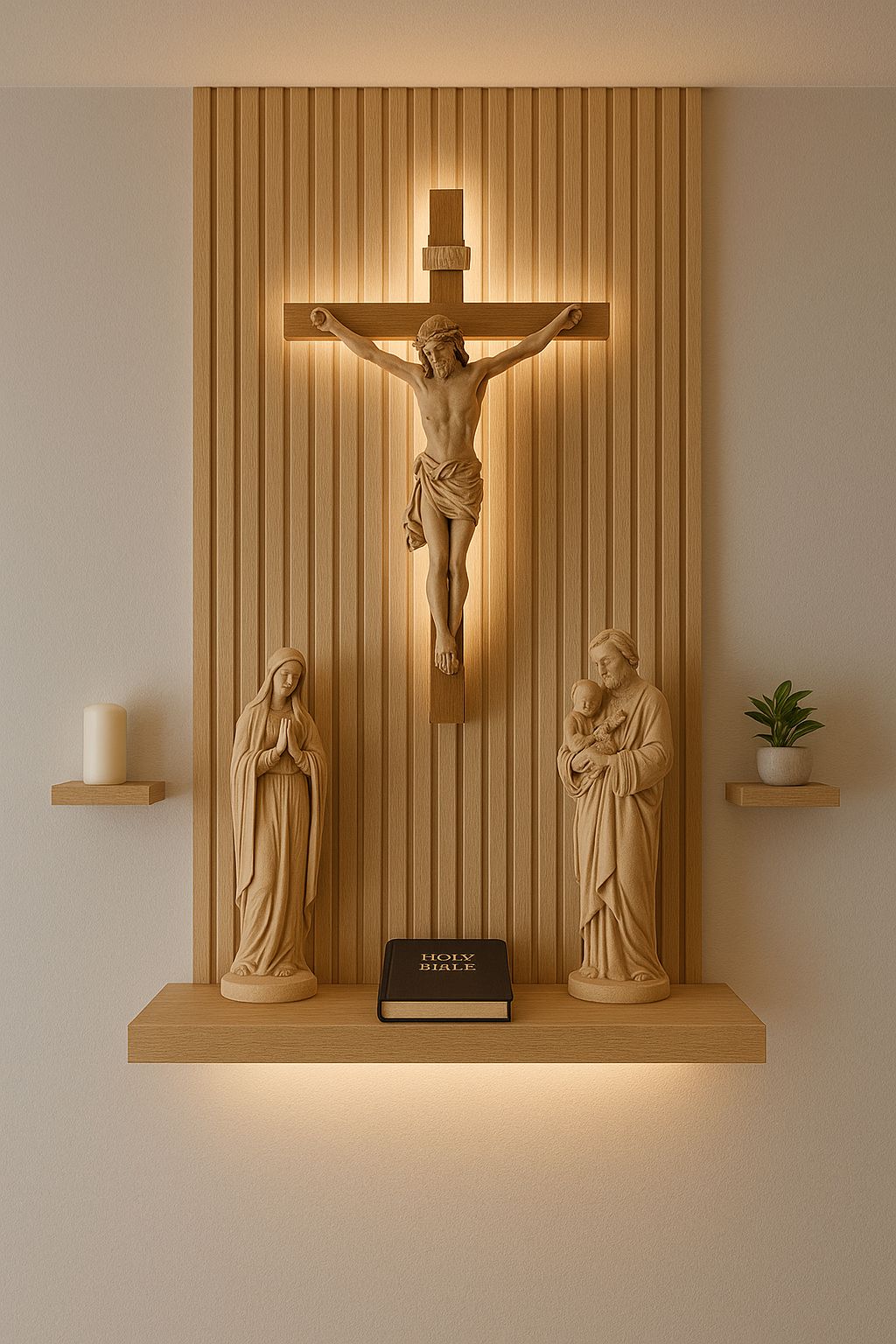
Many Catholic families keep a Crucifix, statue, icon or sacred image in a prayer corner or another appropriate place in the home.
These objects can help create a visible centre for prayer and remind the household that faith is part of everyday life rather than something limited to the church building.
Can statues and images be blessed?
Yes. Religious statues and images may be blessed for devotional use according to the Church’s rites.
A blessing does not make an object magical. It sets the object apart for sacred or devotional use and connects its use with the prayer of the Church.
Christ To The World statues and sacred images
Religious statues and devotional images sold by Christ To The World are supplied unblessed unless specifically stated otherwise.
After purchasing an item, you may take it to the priest at your church and ask to have it blessed.
How should a blessed statue or image be treated?
A blessed object should be treated with reverence and should not be used in a deliberately disrespectful or profane way.
If a blessed statue or image becomes badly damaged and can no longer be used, Catholics normally seek to dispose of it respectfully. If you are unsure what to do, your parish priest can advise you according to local custom.
Do Catholics believe statues can hear prayers?
No. The statue itself does not hear anything. When Catholics pray before a statue or sacred image, the prayer is directed to God or, in the case of Mary and the saints, asks for their intercession.
The material image serves as a visible reminder. It is not believed to be the living person represented.
Sacred images and the Christian imagination
Religious art can help make the truths of faith present to the imagination. An image of the Nativity can draw attention to the Incarnation. A Crucifix can lead to meditation on the Passion. An image of the Resurrection can strengthen Christian hope.
When used well, sacred images do not compete with Scripture or the Sacraments. They support a life of faith by helping the faithful remember and contemplate what the Church believes.
Remember
Catholics do not worship statues or images. Worship belongs to God alone.
Sacred images are visual reminders that can help teach the faith, support prayer, honour Christ and recall the holy example of Mary and the saints.
Authoritative Catholic sources
Catechism of the Catholic Church — Sacred Images
Catechism of the Catholic Church — Sacred Images and the First Commandment